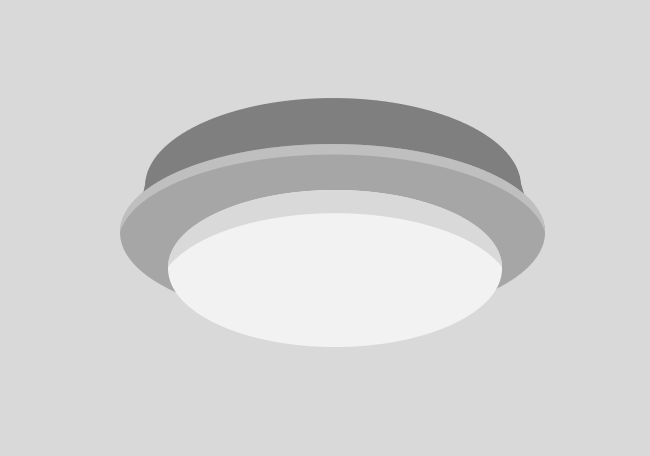
Let's estimate the embodied carbon in different luminaires and estimate how much can be saved with remanufacturing
Select the most relevant luminaire for your project, or upload custom data to get more accurate. Make changes and take it from there!
Stage 1: Select Product
Let's start with some information about the luminaires you're interested in reusing or remanufacturing.
Product or project reference (optional)
(?)Enter a text reference for the product for your own use. For example "Cast bulkheads, Project A, Building B, Floor C, Room D", or a brand name like "Brand Name / Product name"
Which method do you want to use?
(?)Select the most similar product from the list below, or enter your own detailed data.
Use a preset luminaire
(?)Select the luminaire type closest to your product
Type: Select a product
Circularity Rating: Select a product
Description: Select a product
Import a custom luminaire
(?)Advanced users can create a CSV file containing a list of components, materials and associated weights. For help, see the guide here.
Stage 2: Refine Assumptions
Check and amend the assumptions below to improve the accuracy of the estimate.
Production duration (hours)
(?)Manufacturing time per luminaire (the time is used to estimate attributable electricity consumption to each unit).
Production power (kW)
(?)Average electricity consumption of the production process (the power is used to estimate attributable electricity consumption to each unit).
Production location
(?)Location of the final assembly factory.
New scenario: Factory to site distance (km)
(?)For the 'new product' scenario, the distance from the final assembly factory to the location of installation.
Circular scenario: Factory to site distance (km)
(?)For the 'circular' scenario, the distance from the final assembly factory to the location of installation.
Site to waste disposal distance (km)
(?)Distance from the location of installation to point of waste disposal processing.
How much of the product is repaired during its service life? (%)
(?)The TM65 method includes an estimate of the emissions for any components which will be replaced during the product's service life. This assumption is based on an estimate for what percentage of the product's stage A (manufacturing) and C (disposal) emissions should be allocated to spares. So, the method assumes as a default that if 10% of the product is replaced during service life, an extra 10% manufacturing and disposal emissions should be added to the total.
Method: what scaleup factor should be used?
(?)The TM65 method multiplies all embodied carbon estimates by a default scaleup factor of 1.3, to 'account for the simplicity of the method'. It's recommended to use the default unless using for advanced purposes.
Stage 3: Circular Scenario
Tell us a little more about the circular scenario you'd like to explore
Which circular strategy would you like to explore?
(?)
Reused products are used again without modification. They may be cleaned, checked and tested, but are not typically dismantled, upgraded or changed in any way.
Remanufacture is an industrial process which produces a new product from a mixture of new and used parts. Products might be only slightly modified or could be completely upgraded. A thorough testing process should be carried out, and products will be re-labelled by the remanufacturer, who should also issue a new warranty.
How would you like to specify the remanufacturing assumptions?
(?)
Each preset luminaire (or custom .csv luminaire bill-of-materials file) has a circular strategy specified for each component (either reuse or replace). You can over-ride these assumptions by selecting "Specify Custom" and changing the dropdowns below.
Custom remanufacture assumptions (optional)
Let's go into detail about which components you'd like to reuse and which will be replaced.
Optics and diffusers
(?)Parts (usually acrylic, polycarbonate or glass) which control the emission of light.
Main enclosure
(?)Typically the largest, heaviest mechanical element to the product, often plastic, aluminium or steel. In some cases, multiple parts can be considered part of the main enclosure.
Brackets and trays
(?)Ancillary mechanical parts which support or mount components or subassemblies together
LED modules and emitters
(?)Circuitboards or other arrangements of LED emitters such as CoBs.
LED drivers and associated controlgears
(?)Power supplies, drivers, controlgears and similiar electronic components. Ballasts are not included.
Sensors and associated controlgears
(?)Microwave, PIR, photo-cell and other electronic sensor components, and their associated controlgears.
Batteries
(?)All batteries, regardless of chemistry (for example, NiMH, LiFePO4). Note that reuse or remanufacture of emergency products should take adequate measures to ensure these critical products are suitable for use.
Battery and emergency related controlgears
(?)Battery converters, controllers, chargers, changeover units and similar electronic controlgears for use with self-contained or remote batteries or power supplies. Note that reuse or remanufacture of emergency products should take adequate measures to ensure these critical products are suitable for use.
Wiring
(?)All wiring and cables, including insulation. Wires or cables integral to other components (for example, sensors) can be considered under those parts.
Electronics sundry
(?)Other electronic components or components closely related to the operation of electronics. For example, switches, indicators, displays, cable glands, connectors, terminal blocks, cable clips.
Fixings and fasteners
(?)Mechanical fixings and fasteners such as screws, nuts, bolts, clips and similar.
Mechanical sundry
(?)Other mechanical components.
Stage 4: Results and Export
This is a science-based sum of all the greenhouse-gas emissions that result from the production and disposal of each luminaire.
Embodied carbon results are estimated using the CIBSE TM65-2 method, which is a "simplified LCA" method. For more information, click here